TEF/TCF

TEF/TCF

Learn French for TEF/TCF Canada

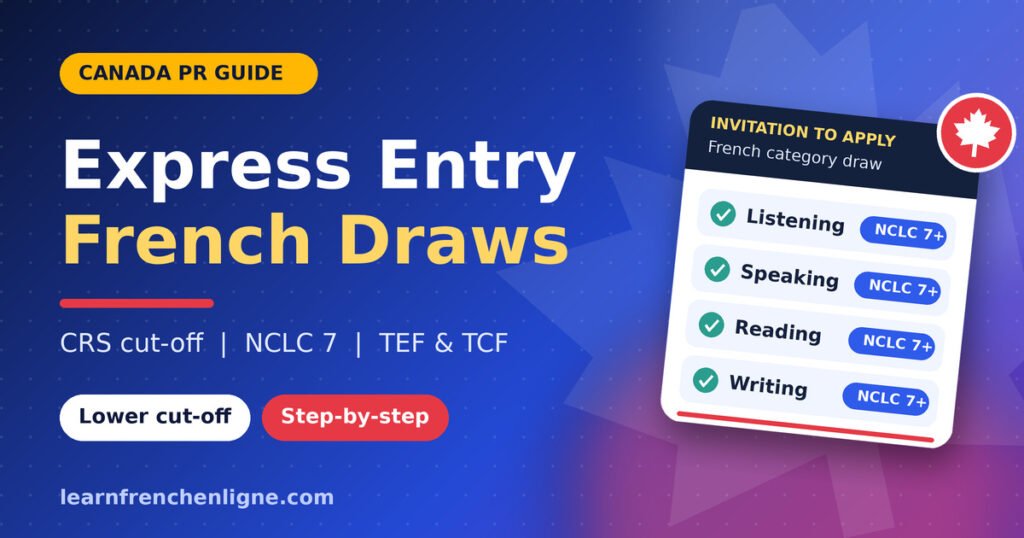
Learning French is one of the smartest decisions for anyone planning to move to Canada, grow professionally, or build a global career. For Canada immigration, French is especially powerful because exams like TEF Canada and TCF Canada are accepted for proving French language proficiency.

Whether you are a complete beginner or already learning French, this guide will help you understand how to prepare for TEF/TCF, how French can support your Canada PR goals, and how to build a practical study plan.

TEF/TCF

DELF VS DALFLequel Choisir SelonVotre Objectif ?

Le DELF et le DALF sont tous deux des diplômes officiels du ministère français de l’Éducation nationale, reconnus dans le monde entier et valables à vie. Pourtant, ils ne s’adressent pas aux mêmes candidats, ne couvrent pas les mêmes niveaux et n’ouvrent pas les mêmes portes. Avant de vous inscrire et d’investir des mois de préparation, il est crucial de comprendre leurs différences fondamentales — et de choisir le diplôme qui correspond réellement à votre objectif.

TEF/TCF

Réussir le DALF C1Programme de Préparationen 10 Semaines

Le DALF C1 (Diplôme Approfondi de Langue Française) représente bien plus qu’un simple examen linguistique : c’est une porte d’entrée vers les universités francophones, les carrières professionnelles en France, et la reconnaissance internationale de votre maîtrise du français. Contrairement au TCF ou au DELF, le DALF est un diplôme permanent — il ne se périme jamais. À ce niveau, vous devez démontrer une capacité à comprendre des textes longs et complexes, à vous exprimer avec aisance et spontanéité, et à produire des écrits structurés sur des sujets complexes.

TEF/TCF

French Subjunctive Made Easy

The French subjunctive is one of the grammar topics that many learners find confusing. But once you understand when and why it is used, it becomes much easier. The subjunctive is mainly used to express wishes, emotions, doubts, necessity, uncertainty, and opinions.

If you are preparing for DELF B1/B2, TEF Canada, TCF Canada, or advanced French speaking and writing, learning the subjunctive can make your French sound more natural, polished, and fluent.

TEF/TCF

French Numbers1–100 Explained

Numbers are among the first things you use in any language — telling the time, shopping, giving your phone number, understanding prices. In French, numbers also follow beautiful mathematical patterns once you crack the code. The key insight: you only need to memorise about 30 unique words to count all the way to 100.

TEF/TCF

French Alphabet Made Easy

The French alphabet has the same 26 letters as English. The challenge — and the beauty — lies in how they sound. This guide walks you through every letter, explains the tricky pronunciation rules, and introduces the special accented characters unique to French.

TEF/TCF

TEF Listening Tips: How to Understand Fast French Audio

Listening is one of the most challenging parts of the TEF Canada exam. Many students know French grammar and vocabulary, but when they hear native French audio, everything sounds too fast, connected, and unclear.

The good news is that fast French audio can be understood with the right strategy. You do not need to understand every single word. You need to train your ears to catch meaning, keywords, tone, context, and exam clues.

TEF/TCF

Master the TEF Expression Écrite

The TEF (Test d’Évaluation de Français) written expression section asks you to complete two written tasks in 60 minutes. Task 1 is a formal letter or email (around 100–150 words), and Task 2 is a structured opinion essay or argumentation (around 200–250 words). Together, they are scored out of 150 points.

TEF/TCF

🇫🇷 Why Learning French in 2026 Is a Powerful Career Decision

Many students underestimate the power of learning a second language. While English is widely used, it is no longer enough to stand out in competitive global markets. French, on the other hand, is emerging as one of the most valuable languages for professionals, students, and immigration aspirants.

Whether your goal is career growth, studying abroad, or moving to countries like Canada, French can significantly increase your chances of success.

Scroll to Top